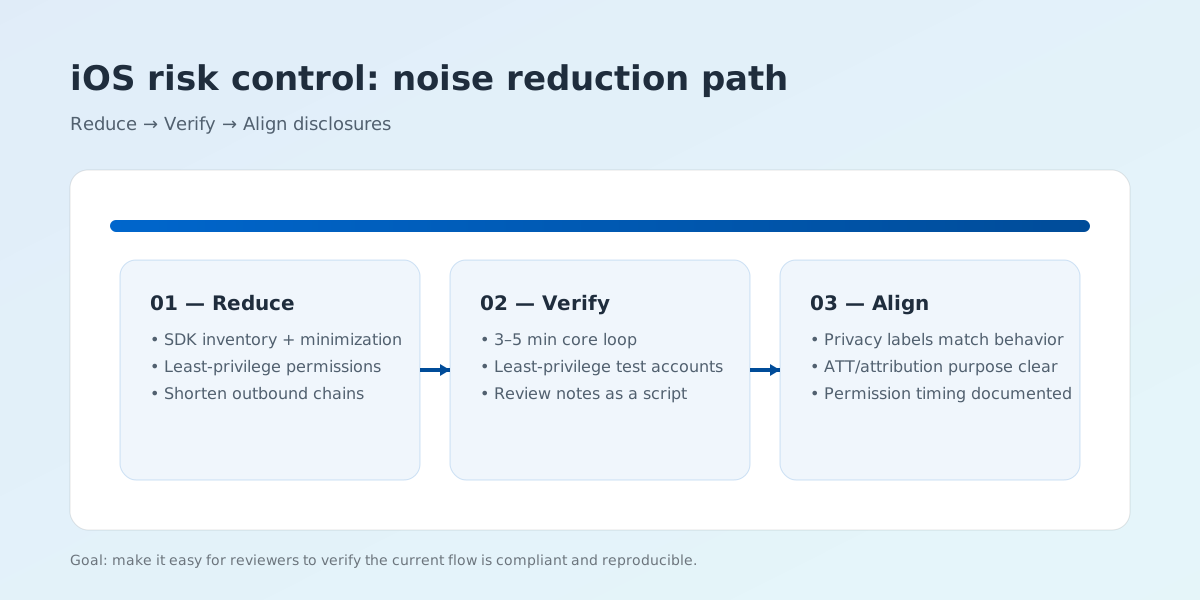
A practical plan (recommended order before submission)
This is an engineering-oriented approach. You don’t have to finish everything at once, but the order matters: reduce noise first, then add proof.
- Reduce SDKs: inventory attribution/push/analytics/payments/support SDKs. Remove where possible; defer initialization where safe.
- Least-privilege permissions: request only when needed and explain purpose at the feature entry point.
- Shorten attribution chains: avoid complex outbound redirects on first submission; unify landing and privacy domains; reduce hops.
- Make test accounts reproducible: least-privilege accounts, avoid SMS/email 2FA, provide a 6–8 step script.
- Align disclosures: privacy labels, ATT prompts, permission descriptions, and actual trigger timing must match.
Review notes: explain “why you need this data” as facts
Reviewers worry about opaque linking and tracking. Replace slogans with verifiable statements:
- Attribution: purpose of SKAdNetwork/ATT, whether cross-app tracking happens, whether data is shared.
- Login: whether login is mandatory, whether core flow can be verified without full onboarding.
- Outbound links: purpose, whether payments occur off-app, and how users return to the app.
- Permissions: trigger timing and which feature requires each permission.
For app matrices: make association controllable
Matrices are not forbidden, but copy-paste execution is risky. Recommendations:
- Stagger submissions: avoid submitting highly similar apps in the same week under linked accounts.
- Separate boundaries: diversify core loop, asset style, and outbound domains per app.
- Governance evidence: prepare a one-page differentiation table for internal use and reviewer notes when needed.