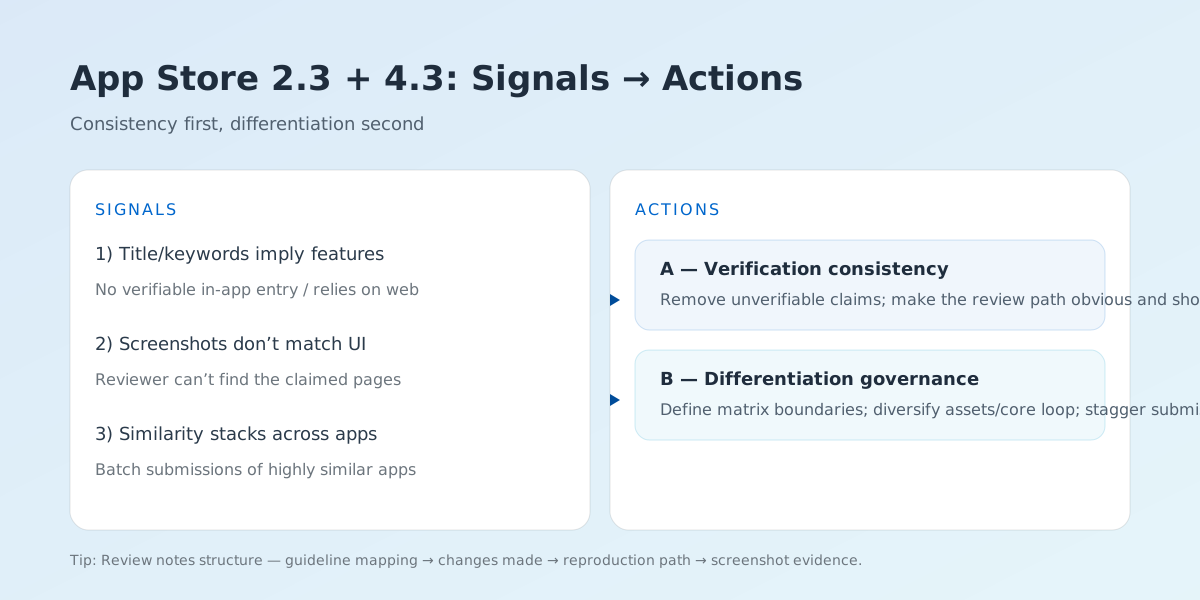
Remediation: a four-step order (lowest cost → highest)
If you want a practical priority: make the app verifiable first, then make it differentiated. Many teams start with visual reskinning; reviewers still reject because the core story remains unverifiable.
- Step 1 — Make metadata a verifiable promise: remove claims that can’t be reproduced in-app. Keep only features that can be verified within 3 minutes.
- Step 2 — Turn screenshots into review navigation: screenshot captions should describe entry and outcome, not concepts. Let reviewers find the page fast.
- Step 3 — Shorten the critical path: don’t hide core entry behind deep menus. Add a reviewer-friendly entry or guide page if needed.
- Step 4 — Govern matrix and prove differentiation: for multi-app/multi-region matrices, define clear boundaries per app and provide a differentiation table.
Evidence pack: how to make reviewers trust your fix
Don’t debate. Provide a short verification script. A reliable structure is:
- Guideline mapping: which parts relate to 2.3 and/or 4.3, and your interpretation.
- Changes made: 3–6 concrete changes (metadata edits, screenshot replacements, in-app entry/path adjustments).
- Reproduction path: steps from launch to core loop (ideally ≤ 8 steps), with test credentials.
- Screenshot evidence: pair “metadata screenshot” with “in-app page screenshot” to show one-to-one alignment.
Submission pacing: avoid stacking similarity signals
If you run a matrix or update metadata frequently, pace your submissions. Get one version through and keep the pass record, then proceed. Batch submissions of highly similar apps increase the probability of stricter review.
- Multi-app under one account: stagger submissions; avoid same-day batch submissions of similar apps.
- Frequent metadata updates: change with a purpose; avoid changing title+screenshots+subscription+links all at once.
- Stabilize first, optimize later: return to verifiable consistency before expanding keywords and conversion tactics.