APP STORE GUIDELINE 4.3

App Store 4.3 (Spam) Rejection Checklist

The key question behind 4.3 is not whether your app works, but whether it has independent value. Highly templated app structures are often flagged as duplicate submissions.

Get Expert AdviceSee iOS Rejection Guide

Common 4.3 Triggers

If these patterns exist, prioritize product-level differentiation before resubmitting; metadata-only changes are rarely enough.

01 Multi-bundle Template

Multiple bundles share nearly identical architecture and flows, while only icon, palette, or minor copy changes are applied.

02 Weak Positioning

The listing does not clearly communicate independent user value, so reviewers cannot justify why this app should exist as a separate product.

03 Homogeneous Assets

Screenshots and preview media are too close to previous apps under the same account, making the package look derivative.

04 Non-verifiable Notes

Reviewer notes claim “fixed” but do not provide reproducible test routes, account credentials, or expected outputs.

Visual Breakdown

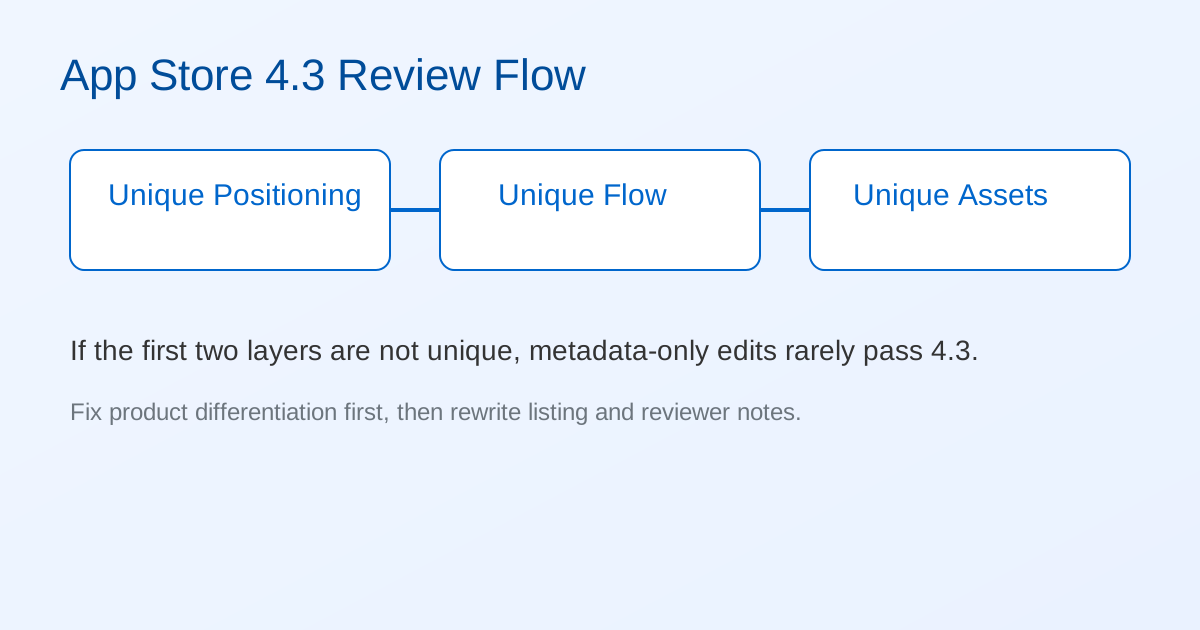
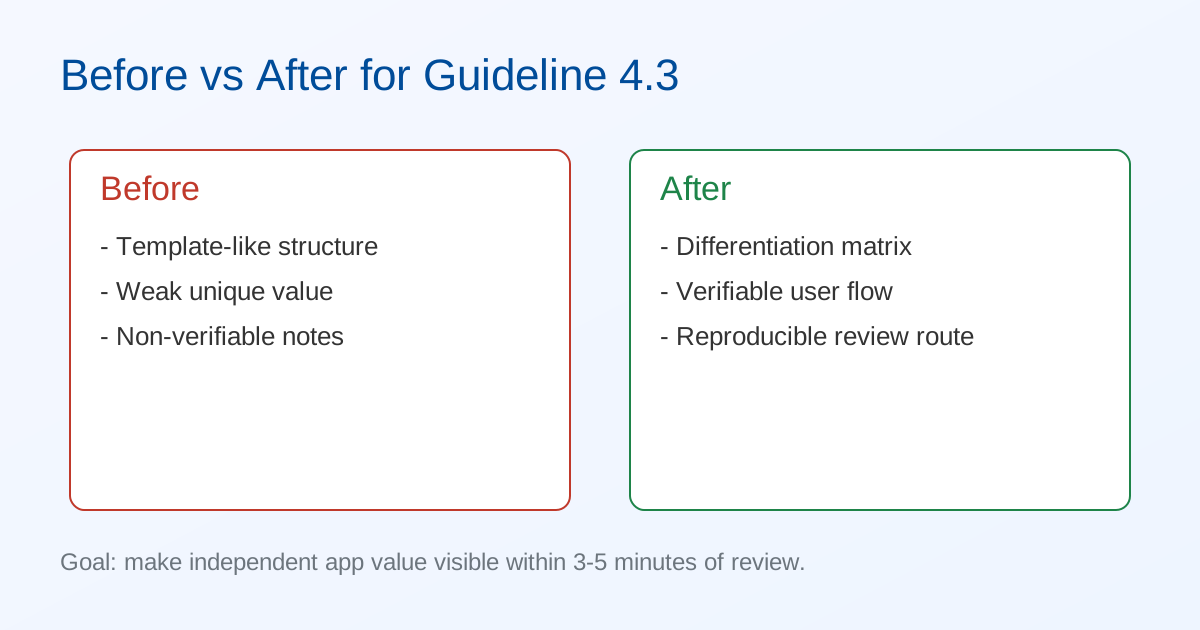
These two diagrams explain what reviewers usually verify under Guideline 4.3.

App Store 4.3 risk flow diagram
Figure 1: Review usually starts with positioning and flow uniqueness before creative asset differences.
App Store 4.3 before after diagram
Figure 2: Effective remediation proves independent value, not only updated wording.

Key Takeaways

The core of Guideline 4.3 (Spam) is not whether your app technically works, but whether it can prove independent product value. Teams often react to rejection by rewriting copy or replacing screenshots. That may improve presentation quality, but it does not solve structural similarity. In practice, better pass rates come from building reviewer-verifiable differentiation first: define distinct user scenario, reshape the main flow, expose unique entry points, and align content structure to that identity.

Think of 4.3 remediation as a verifiability-driven product refactor. Your target is not “looks different,” but “is demonstrably different within 3-5 review minutes.” If a reviewer cannot quickly reproduce your differentiation claim in-app, your resubmission still carries second-round rejection risk even after technical updates.

  • Differentiate product first, assets second, wording third.
  • Map every change to a reproducible review route with expected output.
  • Submit before/after evidence so reviewers can validate quickly and objectively.

8-Step Action Plan Before Submission

  • Build a differentiation matrix with 4 columns: positioning, flow, feature, and assets.
  • Define one independent core scenario and make homepage/navigation reflect it.
  • Remove decorative features that do not support a clear primary user task.
  • Replace screenshots and previews with this exact app's unique core workflow.
  • Rewrite title, subtitle, and description to avoid inherited generic claims.
  • Prepare test account, environment details, click path, and expected outcomes.
  • Structure reviewer notes as: change list, validation route, expected result, proof.
  • Run a 3-minute mock review to check whether differentiation is immediately verifiable.

FAQ

What triggers App Store 4.3 (Spam) most often?+
The most common trigger is highly similar app structures across multiple bundles, with only icon and copy changes but no real product differentiation.
Is changing screenshots and title enough?+
Usually not. Reviewers focus on product-level uniqueness first. Metadata updates should follow functional and UX differentiation.
What evidence should we prepare before resubmission?+
Prepare a differentiation matrix, before/after key-screen comparisons, and reviewer-verifiable test routes with clear expected outcomes.
Can one account still publish multiple apps?+
Yes, but each app should have independent positioning, core scenario, and measurable differences. Also control submission cadence.
How do we reduce second-round spam rejection risk?+
Run a four-layer check before submission: positioning difference, functional difference, asset difference, and reviewer-note difference.