GOOGLE PLAY ACCOUNT RISK

Google Play Developer Account Risk and Suspension Prevention Checklist

Account risk is rarely a single event. In most cases, suspension is the result of weak consistency across behavior, identity, app profile, and review evidence.

Get Expert AdviceSee Fix Guide

High-risk Triggers

These four patterns appear most frequently before warnings, restrictions, or suspension.

01 Identity Inconsistency

Developer profile, payment data, and legal/business identity signals stay mismatched over time.

02 Unstable Release Pattern

Frequent package changes, rapid updates, and repeated sensitive-permission edits trigger risk heuristics.

03 High App Similarity

Multiple apps under one operation look structurally similar in flow, assets, and positioning.

04 Weak Appeal Evidence

Appeals that only state “fixed” without reproducible evidence reduce future trust signals.

Visual Breakdown

Use these diagrams to understand why some accounts recover quickly while others remain restricted.

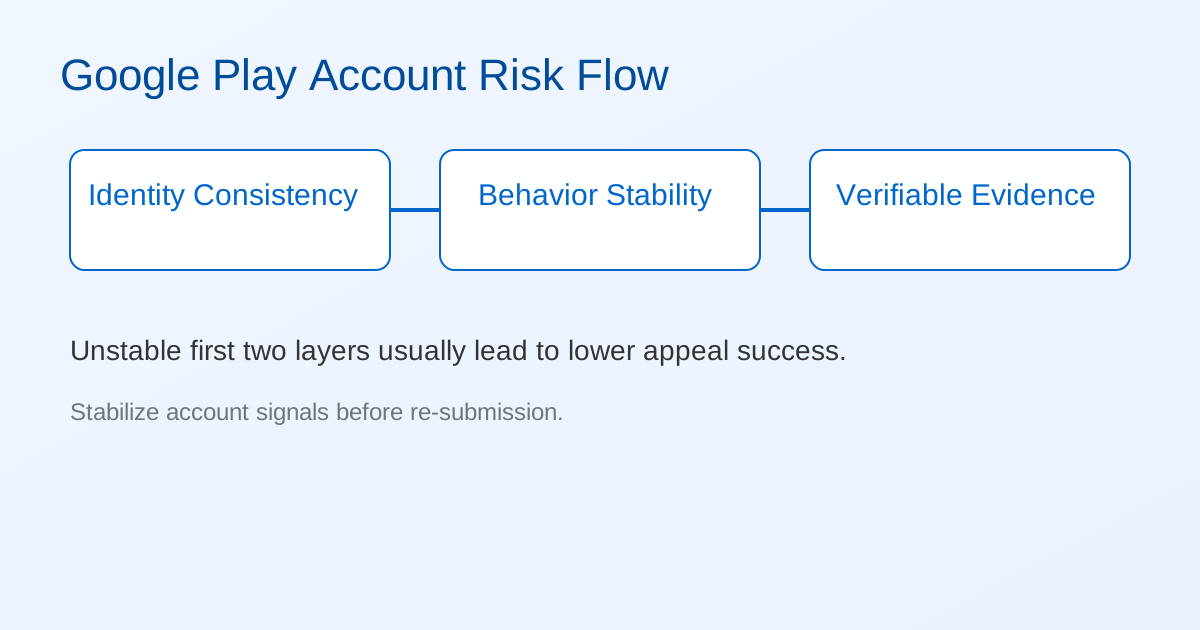
Google Play account risk evaluation flow
Figure 1: systems often evaluate identity consistency first, app behavior second, remediation evidence third.
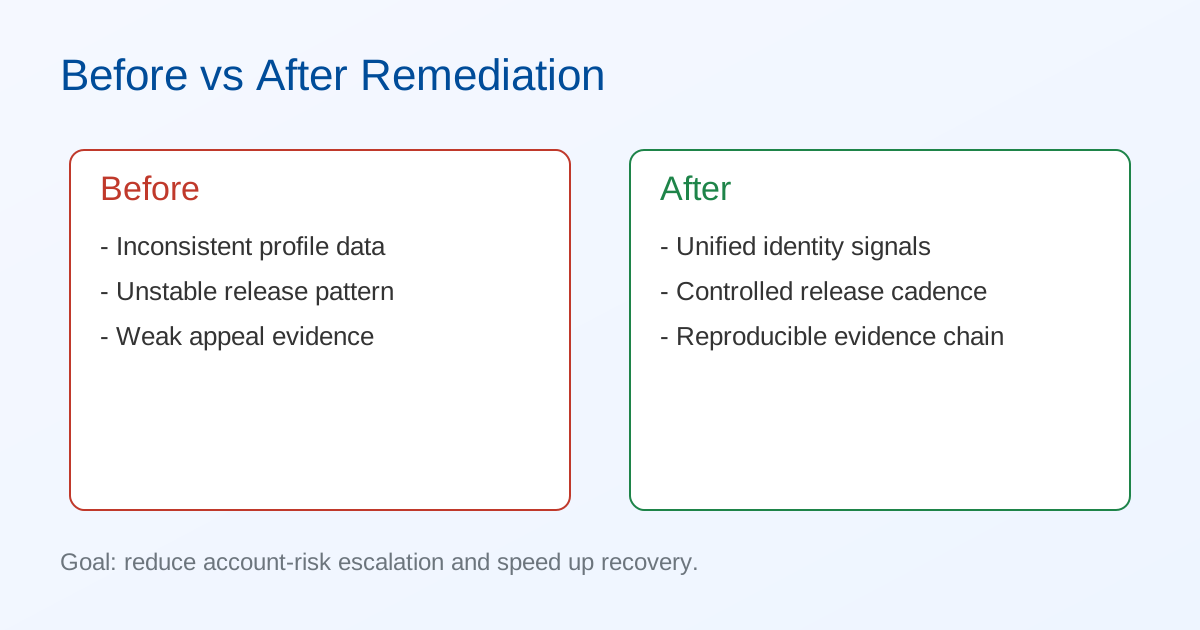
Google Play account remediation before after
Figure 2: strong remediation proves root-cause identification, verifiable fixes, and recurrence prevention.

Key Takeaways

The platform is effectively assessing whether your operation can remain compliant over time. That means the objective is not just to pass the next review cycle, but to build a stable trust profile. Teams often over-focus on immediate resubmission and under-invest in prevention architecture. In practice, stronger outcomes come from managing four streams together: identity consistency, release pacing, app differentiation, and evidence quality.

Treat suspension prevention as an operational system, not a one-off task. For new accounts, the first 3-5 releases should prioritize stability and low-risk feature scope. If you receive warnings, avoid rushed resubmission. First establish a reproducible evidence chain, then submit with clear validation routes and expected outcomes.

  • Fix consistency issues first, content issues second, submission packaging last.
  • Archive reproducible evidence for every high-risk change set.
  • Use low-complexity releases to stabilize account trust trajectory.

8-Step Prevention Plan

  • Unify legal/business identity signals across profile, payment, and support channels.
  • Define release cadence limits to avoid high-frequency risk bursts.
  • Run app-differentiation checks before each new package launch.
  • Align Data Safety, permission purpose, and privacy policy statements.
  • Prepare reviewer routes with account, path, and expected result templates.
  • Archive screenshots, logs, and before/after evidence for rapid appeal response.
  • Run pre-release risk simulation on warning/appeal scenarios.
  • Monitor 72-hour post-release alerts and roll back high-risk elements quickly.

FAQ

Why can a Google Play account be suspended suddenly?+
Common causes include inconsistent identity signals, high app similarity, unusual release patterns, or multiple mild risks accumulated over time.
Are new accounts more vulnerable to risk checks?+
Usually yes. New accounts have shorter trust history, so low-risk rollout and consistent profile signals are critical.
Can multi-account teams face linkage risk?+
Yes. High overlap in ownership, devices, payments, or app structure can trigger association review.
Is immediate resubmission after warning a good idea?+
Not always. Build verifiable evidence first, then submit with a reproducible route to reduce escalation risk.
What is the most effective way to reduce suspension risk?+
Maintain reviewer-verifiable consistency across identity data, app behavior, policy declarations, and submission evidence.